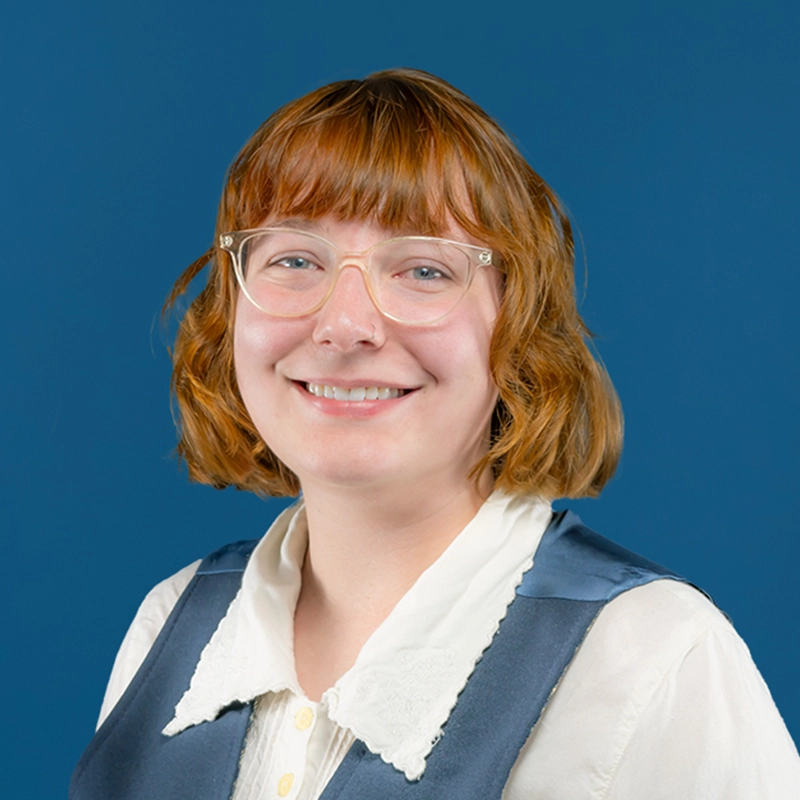

For years, the life of Sydnee Cosner ‘26 followed a strict routine. Schedules were planned down to the minute, and every day came with clear expectations.
After joining the Navy immediately following high school, Cosner spent 11 years serving in both active duty and reserve roles, primarily working in oral surgery. The military shaped nearly every part of her adult life, teaching her both resilience and how to stay calm under pressure.
But somewhere along the way, she started imagining a different future for herself.
“I liked the dental field, and I always wanted to work in health care,” Cosner said. “But I wanted to learn more about the rest of the body and feel like I’m actually making a difference.”
That realization eventually led her back into the classroom. After taking classes part-time at Scott Community College while working, Cosner decided to fully commit to nursing school and transfer to St. Ambrose University to pursue her Bachelor of Science in Nursing.
“I decided I’m going to just go to St. Ambrose full time, drop my job, use the GI Bill, and just focus on nursing,” Cosner explained.
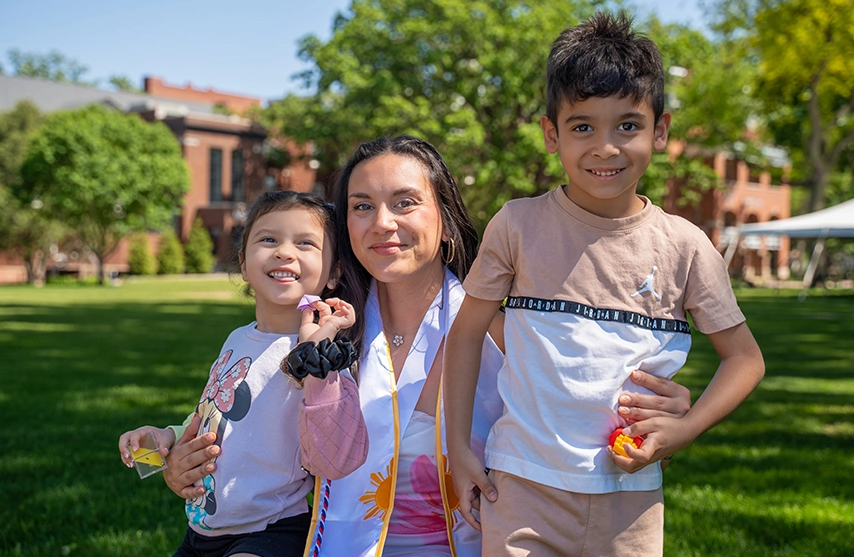
The decision wasn’t just about her career. As a mother of two young children, staying close to home and building a stable future for her family mattered just as much.
“With the kids, I thought it would work out well to go here,” she said. “And I heard St. Ambrose is a really good school, especially with the nursing program.”
Finding community as an adult learner
Coming into the nursing program, Cosner admits she wasn’t sure how easily she would fit in. As a veteran, mother, and nontraditional student, she worried that she would stand out amongst her peers.
“I really didn’t know if I would fit in with these people because they’re all really young,” Cosner said.
But those nerves faded quickly once the cohort began working through the demands of nursing school together. Shared long nights, exams, and clinical experiences helped bridge the gap almost immediately.
“At the end of the day, we all have the same goal,” she said. “We all came together through the program.”
She especially grew to appreciate the confidence and energy her classmates brought into the program.
“I love their outlook on life,” she said with a laugh. “They are very spicy. They know what they want.”
Balancing parenthood and school
For Cosner, balancing nursing school with motherhood often meant taking things one day at a time. Between classes, clinicals, studying, and raising two children, the pace rarely slowed down.
“This has probably been the most challenging thing I’ve done, including 11 years of the Navy,” she said.
Faculty quickly became an important part of Cosner’s experience at St. Ambrose, especially during the moments when balancing school, clinicals, and motherhood felt overwhelming. Rather than feeling like just another student in a large program, she said she often felt genuinely cared for by the people around her.
“I’m super grateful that I have that support system. If I didn’t, I don’t think I would be able to do this,” Cosner said. “If I was feeling stressed out because I didn’t have childcare for certain clinical days or exams, I’m able to talk to one of the professors.”
Even during the hardest moments, though, her children remained the motivation pushing her forward.
“My babies,” Cosner said with a smile. “They’re my inspiration.”
Although challenging at times, Cosner says the Navy prepared her for the discipline and structure nursing school required. Years of military service taught her how to manage pressure and keep moving even during stressful situations.
“It taught me a lot of discipline and time management skills,” she said.
Still, transitioning out of military life came with its own adjustment period. After years of strict schedules and constant direction, returning to civilian life and becoming a student again felt unfamiliar at first.
“It was kind of a challenging transition,” Cosner said. “Going from always being told what you’re supposed to do, to being a free person again and getting to make my own choices.”
Clinical experiences
Clinical experiences quickly became one of the most meaningful parts of nursing school for Cosner. Through rotations in med-surg, ICU, post-surgical units, and the emergency department, she was able to work with patient populations far different from the younger, healthier patients she typically cared for in the Navy.
“It was very cool getting to know how to care for babies and children, and adults that have a lot of comorbidities,” she said.
Her preceptorship in the emergency department especially stood out. The unpredictability and fast pace of the ED immediately felt natural to her.
“I like that you just don’t know what to expect,” she said. “You learn a little bit about a lot working in that area.”
For Cosner, though, the most important lessons came from observing how nurses treated patients during some of their most vulnerable moments. Watching different floors and care teams helped shape the kind of nurse she hopes to become herself.
“You never know what someone’s going through,” she said. “Compassion is super, super important.”
A future in emergency nursing
Now, Cosner is preparing for the next chapter. After taking her children on a beach vacation, she hopes to continue working in the emergency department, a setting that matches both her personality and the fast-paced environment she thrives in.
“It’s definitely the department for the adrenaline junkies,” Cosner said.
As she prepares to leave St. Ambrose, Cosner hopes her story can encourage other nontraditional students who may feel uncertain about returning to school later in life.
“No matter how old you are, it’s okay not to know exactly what you want to do,” she said. “Once you’re in it, though, the sky’s the limit.”
Interested in becoming a nurse? Explore the St. Ambrose University nursing program and discover the immersive experiences and faculty support that prepare students to make a difference in health care.